
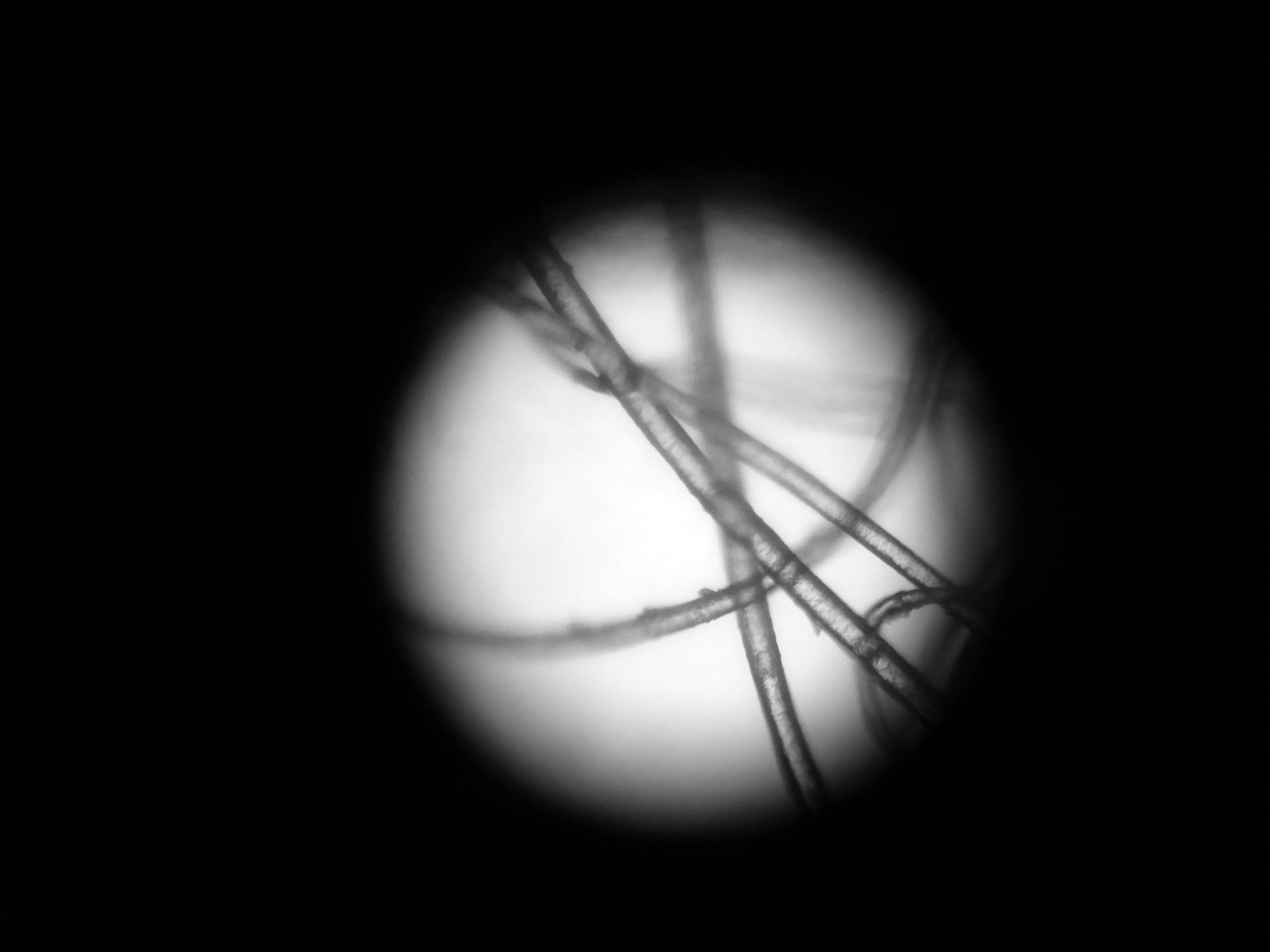
Zoran Todorović, Warmth (photodocumentation), 2009.
Zoran Todorović is an artist with an antagonistically open symptom which anyone who enters into his work, intervention or impact has to resolve for themselves, both emotionally and intellectually, taking responsibility for their own unexpected and unplanned reactions, decisions, choices, declarations and evaluations. The aspects and models of the aspects of Todorović’s artistic opus are essentially biopolitical, in the sense of biopolitics as a social technology for ‘shaping’ human life, because human life is not something that a living being carries ‘in him- or herself’. It is rather a singular event of that being’s performance in an unexpected life situation – that is, in a set trap.
On one occasion, the German director Harun Farocki wrote: “I am not trying to add ideas to film. I am trying to think in film in such a way that ideas emerge from filmic articulation”. [1]
Neither does the visual artist Zoran Todorović[2] add ideas to his productions or seek to illustrate theoretical, political or psychologically motivated ideas with his artistic realisations; on the contrary, he allows for the articulation of a material event among people, and for those people to introduce us, the viewers, into an affective situation which we will interpret antagonistically in accordance with our attitudes to life, beliefs, ideas, moral values or current social positions. He creates a situation which cannot be easily resolved, but which deepens the feeling of insecurity, contradiction and opposition to the norms, habits, convictions or expected attitudes of contemporary man, local or global alike. We are talking about the crucial ambiguity of reaction and expression, caused by unexpected and drastic affect/affects, which are intensively and often subversively put into motion by his artistic work (performance, happening, installation, situation or video presentation).
The relationships between affects and the reaction to affects and statements about an affective event and experience, are the biopolitical impacts of Todorović’s exhibited or performed artistic works/actions. Biopolitical impact refers to a situation, event or presentation, in which a generated singular sample of a form of life is performed as an effective and intensive apparatus of artistic intervention in a specific artistic and cultural context, that is, contemporary public life. It is not a rebellion, but a warning. It sets in motion mechanisms and, thus, modalities for disrupting civic stability, calm, indifference or neutrality towards life.
Each of his events is a singularity: a complete uniqueness there and then, related to the behaviour of the human body (behaviourality), but also, and further, the potentiality of shaping life there and then, related to the artist’s intention to confront the audience with a borderline event within their customary lives, in a situation which is as serious and real as any customary human situation.
The everyday is always serious, even when it has a Beckettian or Keatonian frozen smile of surprise, wonder, or confusion.

Zoran Todorović, Gypsies and Dogs, video, 2007.
A singular event takes place there and then, in a specificity, far from the presupposed clichés, generality of normed practice, and biopolitical expectations. Each of his events crosses the path from an unrepeatable and incomparable singularity to a situation which must be reacted to decisively or indecisively. Todorović works with a singularity that can potentially occur in any conceivable context of everyday life and daily cultural practice. It is about provoking an impact in some individual experiential interval of time, space and form, or the forming of life. Nevertheless, everything that he does at one moment of life, in one place, is exposed and left to realisations and responses within the system of art: directly, as an event, and indirectly, as a document. ”[3] The referential, and thus potential relationship between the event and the document is essential for his artistic practice, which antagonistically and contradictorily confronts the situation of the spectator as a witness to the transgression of visible or invisible social conditions, and with his or her limits for shaping, monitoring or controlling life – the life that breathes, touches, feels, drinks, eats, washes, secretes, stretches, poses, acts sexually, faces danger, i.e. becomes subjected to a very specific artistic impact. Todorović’s aesthetic fascinations are oriented towards forms of life and their critical or urgent, i.e. subversive or, decentered articulations or rearticulations of human forms of life. He is fascinated and obsessively focused on events that challenge the normality of the life of a living creature. In this way, one moves from the position of unquestionable human and social correctness to the human being in question – the human being subjected to the critical and subversive action of the artist.
A note: here, the biological – bios does not mean the multitude of living creatures and their organisms (animals, plants), but the human life of an individual or a community. Thus, biopolitics means politics specific to human life and the life of the human community. The appearance, and the subsequent actualisation of life and its potentialities, are given as a form of life. Agamben has explicitly interpreted the relationship between life and a form of life with the following words: “By the term form-of-life, …, I mean a life which can never be separated from its form, a life in which it is never possible to isolate something such as the bare life.“[4]

Zoran Todorović, Gypsies and Dogs II: Symptoms and traces of the public reception, ProArtOrg, 2014.
The essential thesis of this short study is associated with Zoran Todorović’s “tactical approaches” to the borderline conditions of our habituation to life as a social/political/ethical norm that are not usually questioned. In other words, he provocatively tests the biopolitical conditions of singular forms of life.
Therefore, I venture to say that there are two modalities of biopolitics that intersect in Todorović’s interventional actions, categorising his, i.e. the third position of biopolitical action:
- first, biopolitics is a form of discipline carried out by the state and state apparatuses within society, which serves to determine the living, political and moral, public and private, structuring of the citizen in a liberal society – in other words, the Foucauldian [5] biopolitical model;
- second, biopolitics is an expression of the effort – by abstract or concrete power – to implement the politicisation of the biological, i.e. the living, within the real everyday forms of life in the totalitarian but also consumerist formats of contemporary society – in other words, the Agambenian [6 ] model of biopolitics.
The third position is the one which Zoran Todorović achieves as an artist – that is to say, in the context of presenting a work of art, the sensorial-physical distribution of surprising affects and their different intensities is realised through selected and constructed critical and subversive samples of forms of life.
The biopolitical potential of Todorović’s artistic activity is discernible in each of his works, from the installation Untouchables / Material Energy (1992–1994, 2002) and Cannon (1996), through Bite (1997), Staring (1998), Bride (1998), Forest (1998–1999), Assimilation (1998–2008), Laughter (2001), Agalma (2003–2005), to Gypsies and Dogs (2007), Warmth (2009), Lorem Ipsum Portraits (2014), and Integration – Illegal People’s Project (2017). (2017). Loosely speaking, it can be said that he has provoked forms of life within three different, though closely related regimes: (1) a regime of dangerous machines (Untouchables and Cannon), (2) a regime of strained or irritated microecologies of the material i.e. anatomical, organic and behavioural human body (Bite, Staring, Bride, Noise, Assimilation, Laughter, Agalma), and (3) a regime of the micropolitical body – racial, collective-investmental, exceptional and transitional, or migrational. Each of these regimes has produced uncertain danger (the machine), utilisation (the performative body of the model/performer), or socialisation/desocialisation (individual and collective) of human forms of life.
Todorović brings the administratively prescribed or imagined “conditions of discipline” and “the customary i.e. normal, normative politicisation of the biological” in society to a critical point – he reaches the limit zone of acceptability or tolerability. The critical point indicates the potential possibilities of accepting or rejecting his offers for the event’s outcome. An unexpected event occurs in an unexpected place; its ultimate or complete meaning is not transparent. What is important is the opacity of reason, meaning and consequence. By crossing over that indicated and indexed critical point one enters the field of risk and danger. The risk the artist suggests or takes is not the great risk of deciding between life and death, but the risk of shaking up normed or habituated everyday ‘normality’. Arriving at or crossing a critical point is an intentional artistic intervention which is intended to show the viewers – the visitors to the exhibition or festival – that they are entering a field of dangerous uncertainty regarding beliefs in and identifications of what is good or bad, right or wrong, moral or immoral, lawful or unlawful, permitted or forbidden, dangerous or harmless, sick or healthy, human or inhuman. See, for example, the complex and contradictory polemical debates about Roma identity, human rights and, finally, racial equality and inequality, in his project Gypsies and Dogs. [7] This polemic has been transferred from the artistic scene to the scene of cultural activism and human rights. What the polemic failed to show was that with this, as well as his other projects, Todorović does not present a political or moral position on the ‘Roma issue’ or ‘tactical media’, but instead opens up a non-transparent affective biopolitical situation, whose meaning or political correctness, or rather incorrectness, must be worked out by each individual spectator or by each active interested group of interpreters.

Zoran Todorović, Agalma, performance / action, 2003 – 2009.

Zoran Todorović, Agalma, performance / action, 2003 – 2009.
Todorović does not make a statement in the manner of artists who identify with a political orientation or mode of cultural/social activism – he neither expresses nor declares a resolution of these possible ambivalences or (more often) polyvalences. He does not speak on behalf of ‘our’ or ‘their’ cause, but emphasises the uncertainty of the self-intelligibility of their or our cause. The potentiated uncertainty is, in some cases, completely neutral and indifferent (Lorem Ipsum Portraits or Warmth), while, in others, it becomes irritable and aggressive (Agalma or Integration). The work Gypsies and Dogs is set in an ambivalent way – the visual appearance of the work (a video recording) is aesthetically and meaningfully neutral, and completely indifferent, but the title ‘Gypsies and Dogs’ turns it into a biopolitically affective rebus. The way the viewer solves the rebus is either by leaving it neutral or, on the contrary, sharpening it up to critical racial issues, children rights issues, etc. This ambivalence is the necessary mechanism of the artist’s biopolitical work – provocation, subversion, etc.
It is important to underline that Todorović is not a didactic artist whose intention is to biopolitically depoliticise or, at the other extreme, politicise or improve human life, or as an activist to indicate a generally acceptable solution for the micro- or macro-community. On the contrary, he is an artist with an antagonistically open symptom [8] which anyone who enters into his work, intervention or impact has to resolve for themselves, both emotionally and intellectually, taking responsibility for their own unexpected and unplanned reactions, decisions, choices, declarations and evaluations. The aspects and models of aspects of Todorović’s artistic opus just described are essentially biopolitical, in the sense of biopolitics as a social technology for ‘shaping’ human life, because human life is not something that a living being carries ‘in him- or herself’. It is rather a singular event of that being’s performance in an unexpected life situation – that is, in a set trap.
Something happens and that event affects the human body with its intensity, regardless of the meanings, the context, or the understanding of the observer or listener. The effect is recognisable and leaves a material trace despite the interpretation and interpretations that follow. The fact that someone swallowed a piece of processed human tissue, or lathered his own body with a soap made from human fat at the exhibition opening, or drank a bottle of beer produced from migrants’ urine, remains ‘without symbolic justification’; it has happened in a singular situation, among some people and for some people, and it is a matter of momentary – fleeting – choice and effect. No criteria of universal truth, moral or political ideals, or fateful choice are offered. The event happened, although it did not have to happen, but could have also been repeated countless times. For example, the Agalma project is a complex work by Todorović. It was established as a project with the purpose of transferring matter – that is, fat – from the artist’s body into a personal hygiene product (soap). The soap made from human matter initiated a public spectacle: bathing at an exhibition or a festival. Agalma is presented as a complex system that subjects the presupposed cultural conditions in which this artistic project takes place to an action: complicity in the game of exchange of matter in the fields of the visible and the tactile. At one point, the turn from the ‘symbolic gesture’ as representative of the event to the actual or immanent living and intense event, which is beyond the influence of assumptions and, therefore, of transcendence, became important. The event’s pure immanence is, precisely: LIFE. [9] It refers to the produced physical effects, which act with different intensities on the body, on bodies, on relationships between bodies in some individual space and time. If we apply this way of thinking to the concepts essential to Todorović’s artistic practice, then his artistic opus is perceived as something that is connected to an effect, namely, to the intensity of the effect on the human body in the process of perception and affectation – and it is here that the event, with its consequences in life, becomes independent of the artist’s intentions: “Affect is independent of the creator through the self-positing of the created, which is preserved in itself.”[10] The notion of affect can then be connected to the notion of ‘attraction’. Attraction means attracting the attention of the viewer, and affect is the intensity and duration of the attention attracted by the performer, spectator or accomplice to the event, to which the living body relates.
Conclusion!
Cases of performing forms of life and the affective intensity of forms of life can be found in quite different artistic practices, from activism through bio art and the new media art, to radical performance. However, Todorović’s artistic work is an exception to all this, since he uses forms of life as a medium (the intervention material), and the critical conditions of biopolitics, exemplified in various samples (such as covering the body with bees, making food or soap from human fat, processing human hair into blankets, or producing beer from migrants’ urine) as a medium, i.e. as a means to initiate and distribute a disturbingly intense sensory-bodily affect.
Zoran Todorović can be seen as someone who posits an affectively open symptom between the accomplices, the performers and the audience. His biopolitically motivated action/intervention has the character of a radical performance, since he acts – with his body, the body of the performer or the bodies of operational partners, accomplices and the audience – in the zone of risk, danger or disturbing uncertainty which confronts, finally, the rational and normative contemporary social subject with the material non-intentionality and transgressiveness of the organism, biological-human materials or socially unpredictable, i.e. unresolved antagonisms and conflicts.

Zoran Todorović, Assimilation, performance / action, exhibition display in Glasgow, 2010.
Todorović is not fascinated by the possibilities of new technologies and their effects in art. He is an introverted user or consumer of the new media, mass media or socio-technological practices in the performance of a critical, subversive, singular and behavioural event, whose intensity and affects are presented live or documented and mediated in communication or exhibition systems in the worlds of art. For him, tactical media come across as products of mass social technologies, such as the performance of hypnosis, serum injection, application of drugs, processing of plastic surgery waste, application of plastic surgery to the human body, and diet implementation, and also behavioural relationships on the street or in private spaces, as well as confrontation with racial contradictions, the indexing of sex work, etc. Todorović’s artistic opus establishes itself as a ‘live performance’, and introduces social biotechnologies into a specific performative situation that corresponds to real, affective life situations and, what is more important, choices and decisions. He situates the performative situation either as an intervention on the bodies of others (the author’s experimentation with interventional otherness), or his own body (model of the artist’s body as an object and subject of art). The performative event appears within ‘privacy’. It is then presented to the public through the media. The performative event appears within the ‘public’, where it includes interaction with the biotechnological limits of the normality of the human body action – that is, the bodies of collaborators in the art project or the present audience, who are led to a state of reflection on their own intimacy within the public sphere of reception and interpretation of the work of art. . The relationship between the private and the public – the intimate and the communal – is explicitly elaborated as a constitutive atmosphere of performing forms of life as an event within an artistic project. The aspects and models of aspects described in Todorović’s artistic work are essentially biopolitical, in the sense of biopolitics as a social technology for shaping human life as real life. Human life is not something that a living being carries ‘in him- or herself’ and ‘for him- or herself’. It is rather an inscription – more precisely, a singular event of inscription – of that being into a life situation or a form of life, i.e. into a lifetime as well as a living space, as something which is unrepeatable, always different and changeable in this world, or rather, as a conflict between nature as living matter on the one hand, and society as an organisation of the behaviour of developed and culturally elaborated forms of life, on the other.
1 Susanne Gaensheimer, Nicolas Schafhausen (eds), Harun Farocki: Imprint/Writings, Lukas&Sternberg, New York, 2001, 38.
2 Zoran Todorović graduated from the Faculty of Fine Arts in Belgrade in 1992. He received his MA degree in the class of Professor Milica Stevanović in 1995. He started teaching at the Faculty of Fine Arts in 1998 . He exhibited for the first time in 1992 . at the Dom omladine Gallery in Belgrade. The official website of the artist: https://www.zorantodorovic.com/
3 Compare with Boris Groys, „Umjetnost u doba biopolitike – od umjetničkog djela k umjetničkoj dokumentaciji”, from Neda Beroš (ed), Boris Groys: Učiniti stvari vidljivima – Strategije suvremene umjetnosti, Muzej suvremene umjetnosti, Zagreb, 2006, pp. 7–28
4 The concept of „for of life“ should be traced from Ludwig Wittgenstein’s discussion of language games to the concept put forward by Giorgio Agamben, „Form-of-life“, in Paolo Virno, Michael Hardt (eds), Radical Thought in Italy. A Potential Politics,, University of Minnesota Press, Minneapolis, 1996, p. 151.
5 Mišel Fuko, „Pravo smrti i vlast nad životom“, in Istorija seksualnosti 1, Prosveta, Beograd, 1982, pp. 124–127.
6 Giorgio Agamben, „Uvod“, in Homo sacer. Suverena moć i goli život, Multimedijaslni institut, Arkzin, Zagreb, 2006, p. 16
7 Zoran Todorović (ed), Gypsies and Dogs II. Symptoms and Traces of the Public Reception, ProArtOrg, Beograd, 2014.
8 Miško Šuvaković (ed), „Kritično dejstvo & intenzitet afekta. Analize umetničkih produkcija Zorana Todorovića“, in Z.T. Intezitet afekta. Performansi, akcije, instalacije: retrospektiva Zorana Todorovića, MSUV, Novi Sad, 2009, p. 27.
9 Gilles Deleuze, “Immanence: A Life”, from Pure Immanence – Essays on a Life, Zone Books, New York, 2001, p. 27.
10 Žil Delez, Feliks Gatari, „Percept, afekt i pojam “, from Šta je filozofija?, IK Zorana Stojanovića, Sremski Karlovci, 1995, p. 206.
Related posts
Petar Jevremović
A BRIEF APOLOGY FOR LIGHT
Robert Irwin, Installation at the Spruth Magers in Los Angeles, 2018. A BRIEF APOLOGY FOR LIGHTorTHE TALE OF THE HAPPY POET “The secret is for the happy, says Schiller. The s
Mario Kopić
FROM THE GOOD LIFE TO THE BARE LIFE
Danse Macabre, Trinity Church Hrastovlje, Kopar, 1490. What can be more important in life than life itself? What can be more precious in life than life itself? What is it that over

Anica Tucakov
“I THOUGHT I SAW CONVICTS!”
Vladan Joler, “New extractivism”, exhibition display, Museum of Contemporary Art Vojvodina, Novi Sad, 2021. ON THE CARTOGRAPHICAL INVESTIGATIONS OF VLADAN JOLER The idea of cog
Jovan Čekić
THE ART OF MULTITUDE
Share Lab, Facebook Algorythmic Factory (detail), www.labs.rs, 2016. Following the disintegration of the former world, we are wandering between its fragments establishing different
Bojana Matejić
STRATEGIES AND TACTICS OF INTERRUPTION
Vladan Joler and Kate Crawford, “Calculating Empires A Genealogy of Technology and Power, 1500–2025”, 2023. DATA AESTHETICS IN THE AGE OF SEMIOCAPITALISM: STRATEGIES AND TACT
Goran Gocić
BIOPOLITICS, REALITY SHOWS AND SOCIAL NETWORKS
Igor Simić, X <3 Y, video, 2017. The first dating app based on genetic and financial matching. People are algorithms, love is a technical problem. Reality shows have a purpose
