
TECHNOLOGY: PERIL AND POETIC IMAGINATION
Hephaestus, the unpleasant and ill-tempered Greek God of technology, was evicted twice from Olympus. Yet, despite the revulsion the other gods felt towards him, they eagerly sought his services because his great technical and artistic skills made him indispensable. This love-hate relationship towards technology can be traced forward to these days, especially considering the consequences of the Fifth Industrial Revolution.
In the Book XVIII of the Iliad, which is called the Hoplopoiea (Weapons Creation) the outcast Hephaestus was working in his “starry golden court”, where Hera,
“reigning queen of goddesses”: “…found him in a sweat/ About his bellows, and in haste had twenty tripods beat/ To set for stools about the sides of his well-builded hall./ To whose feet little wheels of gold he put, to go withal,/ And enter his rich dining-room; alone, their motion free / And back again go out alone[αυτόματα), miraculous to see.”
(Book XVIII, 330-335, trans. George Chapman).
As we can see, the outsider god, as a great craftsman, was the first inventor of many machines, including automata, described as a machine moving on its own by means of internal energy. Technology, therefore, as an integral part of human development, was always discussed as a peril or-and used as an instrument of poetic imagination. Throughout history, the interdisciplinary approach to technology – from philosophy, anthropology, sociology, history, economy, culture etc. – as embedded in all human activities has been tracing the changes it brings with every technological invention throughout all four technological revolutions, and its impact on culture and society.
However, we now live at a time which brings the question of artificial intelligence to the forefront. Artistic production started to explore this field quite a while ago, investigating the new principles of techno-feudalism and the procedures of human and nature exploitation, the inequalities generated and the new financial and production systems hidden behind the black screens of our computers and mobile devices. Accumulated crises in the fields of finance, politics, war, climate, environment, and “investor-led” capitalism, have blocked our thoughts and chained our imagination. Therefore artists have started to work on the new imaginarium as well, to envision possible ways of using technology for a more suitable future.
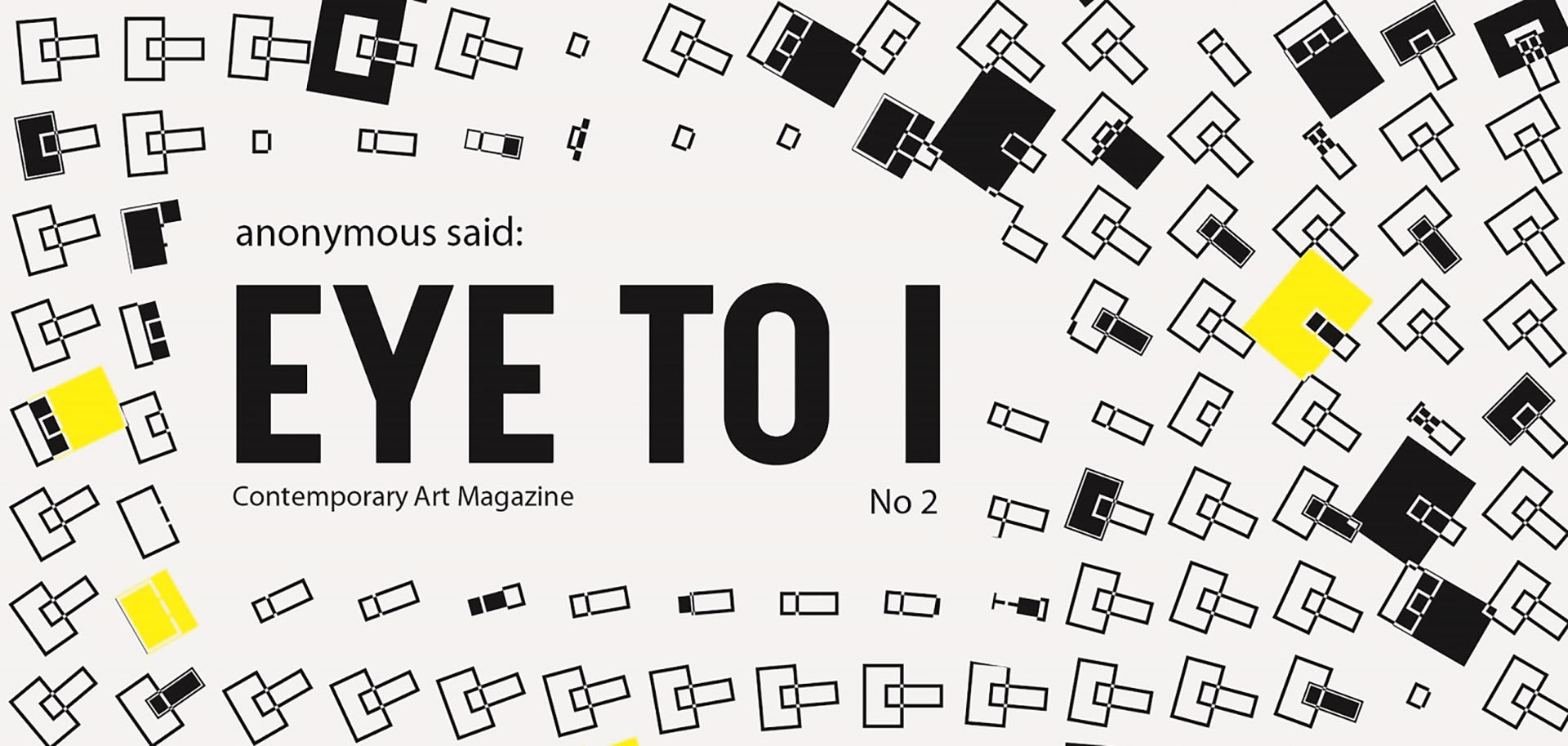
This new edition of EYE TO I magazine brings essays addressing the Fifth Industrial Revolution under four aspects: the relationship between the new technology and human and natural extraction as developed in recent art projects, strategies of coexistence with it, as well as the question of the technology of the art system itself, considered in terms of a technology employed by another Greek divinity, Pallas Athena – technology as tactics and strategies.
We would like to express our gratitude to our authors and artists for this edition: Petar Jevremović, Uroš Krčadinac, Bojana Matejić, Darija Medić, Jan Krasni, Nela Tonković, Milica Lopičić and Vladan Joler. They are addressing this issue from the three perspectives specified.
Borislav Pekić, one of the most important literary figures of the 20th Century, writes in his anthropological novel “Atlantis”: “It is our duty to follow our imagination at least as much as we respect the obviousness of the real world we live in. Because the truth is most likely to be somewhere between where our imagination and someone else’s reality intersect.” That is why we need to talk about pro- and anti-technological sentiments, and the role of art in this debate. We need both to follow Hephaestus’ way of working and doing, and Athena’s way of understanding.


CONTENT:
Introduction
TECHNOLOGY: PERIL AND POETIC IMAGINATION
9 — 14
Petar Jevremović
THINKING AS SUBVERSION
20 — 30
Uroš Krčadinac
DATA DADA: ARTIFICIAL INTELLIGENCE AND (ANTI)FASCIST ART
31 — 33
Uroš Krčadinac
CENTAUR CULTURE: GENERATIVE CHESS MAPS
AS THE LANGUAGE OF A NEW DIGITAL SENSIBILITY
36 — 41
Anica Tucakov
HAVEN’T WE ALWAYS BEEN CYBORGS?
48 — 55
Bojana Matejić
DATA AESTHETICS IN THE AGE OF SEMIO-CAPITALISM: INTERRUPTION STRATEGIES AND TACTICS
58 — 64
Darija Medić
THE NEW MATERIALISM OF THE NEW EXTRACTIVISM
69 — 83
Jan Krasni
BLOOD, SOIL, BATTERIES. OR: RARE EARTHS, GEOPOLITICS
AND MEDIA THEORY
89 — 93
Malvina Žgur
MILICA LOPIČIĆ’S ART IN TRANSIT, OR FROM ART WORK TO COMMODITY
96 — 99
Nela Tonković
RECORDING THE UNCERTAINTY: THE COLLECTION AS A
(NON)PERMANENT REFUGE
IMPRESUM:
Publisher: NGO “Anonymous said:”, Belgrade, Serbia
Represented by: Sandra Marković Milisavljević
Editor-in-Chief: Anica Tucakov
Cover page graphic design: Željko Petrović
Translation to English: Katarina Radović, Edvard Đorđević
Proofreading: Jonathan Boulting
Printed by: Službeni glasnik, Belgrade
Belgrade, Winter 2023..
This publication is supported by the Ministry of Culture of the Republic of Serbia
Related posts

From “EYE TO I“ to “I TO EYE“
We are in need of a new way of seeing things We introduce our readers to the first issue of EYE TO I magazine, which is dedicated to contemporary visual art. In its structure, this
